
Oct-07-2026
Drones: Cognitive, Information and Psychological Warfare. Featuring the Perspective Given by Andrew Fox
Jorge Marinho
PhD in Communication Sciences, BA in International Journalism
adsadsdsad
Júlio Ventura
MA in Political Science and International Relations, BA in Law, accredited parliamentary assistant - European Parliament (Brussels, Belgium)
e-mail: marinho.mediaanalysis@gmail.com
Abstract
Drones, as cognitive, information and psychological warfare instruments, along with a few aspects related to asymmetric warfare, are the subject of reflection throughout this article. Also within this context, particular attention is given to the relationship between science fiction and future warfare, as well as intelligence and measures intended to counteract information and psychological warfare.
This piece comprises bibliographical research and an exclusive interview with Andrew Fox, while seeking to address the article's topic in depth.
Keywords: asymmetric warfare; cognitive warfare; drones; information warfare; psychological warfare.
Introduction
This article purports to serve as a reflection on the current role of drones in the sphere of cognitive, information and psychological warfare. To this end, bibliographical research was conducted and, in order to examine the stated topic in depth, an exclusive interview* was given by a distinguished expert: Major (Ret.) Andrew Fox (British Army / The Parachute Regiment). With regard to the interviewee, we point out the following aspects, inter alia (Andrew Fox):
-2021- 2024: senior lecturer in Communications & Behavioural Science / Royal Military Academy Sandhurst (United Kingdom)
-July 2024 – present: senior fellow / The Henry Jackson Society (United Kingdom)
(Defense, Middle East and disinformation researcher)
-2014 – 2016: MA in Modern War Studies & Contemporary Military History / University of Buckingham (United Kingdom).
Generally speaking, a drone is ‘‘an unmanned vehicle capable of programmed / software controlled or autonomous operation’’ (Drone Industry Glossary of Terms). In this article, the word drone per se refers, in principle, solely to aerial drones. Besides these, there are also terrestrial, surface and underwater drones.
Currently, drones are used by governments, state and non-state actors in theaters of conventional and non-conventional warfare (Singh January-June 2025, p. 19). These weapons impact tactical, operational and strategic levels (McMillan August 26, 2026). (There are those who relativize the importance of drones, in the operational and strategic domains, while acknowledging, however, that these weapons are revolutionizing the way armed conflicts unfold (de Wijk May 11, 2026)). The growing use of these tools, in the sphere of warfare, is due, in large part, to their low operational cost, to their ease of use and their high degree of mobility (Bonvie, et alii November 6, 2025). This is currently taking place in several armed conflicts, such as between Russia and Ukraine and between Iran and Israel.
In this article, we focus on cognitive, information and psychological warfare. It should be underscored that, even though cognitive warfare remains very much at the heart of modern conflicts, it is yet to be consistently defined (Rushing, et alii March 5, 2025). It was in 2017 that Vince Stewart, Director of the US Intelligence Defense Agency, first used the term ‘‘cognitive warfare’’ in a military context (Bazalgette, Janin November 5, 2025).
Several experts feel that cognitive, psychological and information warfare are intertwined (Ibrahim, et alii December 1, 2023), and there are even those who consider that the former encompasses the other two (Ekka, August 18, 2026). Other authors differentiate cognitive warfare from information operations, psychological operations and strategic communications (Krewson, Clarke July 9, 2026). Cognitive warfare is the fight itself (Krewson, Clarke July 9, 2026). While information operations, psychological operations and strategic communications are used in the fight, they are not the fight (Krewson, Clarke July 9, 2026). In short, regarding cognitive warfare, there are maximalist and minimalist insights (Dick December 4, 2025).
Taking into account drones' versatility, their roles in the domains of intelligence and asymmetric warfare are also present in this article.
While certain aspects are highlighted throughout this work, we do not overlook the fact that those who examine the use of drones in the sphere of warfare should have an overview enabling to interconnect said weapons, namely, with artificial intelligence (AI), cyberwarfare and electromagnetic warfare (EW), among others.
Cognitive, information and psychological warfare
Maddox (July 24, 2025) believes that, among the benefits of drones, cognitive applications are perhaps those least examined. However, this subject matter is starting to warrant some attention (Maddox July 24, 2025). In this article, we feel that, in order to attain strategic goals, cognitive warfare's target is the role of the brain in building reality, seeking to influence beliefs, perceptions and decision-making (Wood May 15, 2026). In this field, certain aspects are greatly important: disseminating narratives, for instance, through media and social media; influence on receivers' interpretation of messages (Valantin, Lollia April 6, 2026). This is somehow related to the ‘‘Strike, Show, and Tell’’ Doctrine (Panda July-September 2025, p. 51). On top of conducting military operations, it's necessary to capture and divulge duly selected images, followed by creating a strategic narrative, with the purpose of accommodating the event (Panda July-September 2025, p. 51). Both the military and politicians acknowledge that control over visual narratives is as significant as territorial control (Panda July-September 2025, p. 60).
In reality, drones also take part in information warfare (Atherton March 26, 2022). A relevant aspect of these modern weapons is their ability to capture real-time images of the terrain and use this as part of propaganda (Atherton March 26, 2022). These duly edited images give rise to videos which, for instance, can be disseminated through social media (Drones Play Key Role in Terrorist Propaganda, On / Off Battlefield June 24, 2025). There are cases involving videos which, based on images captured by drones, prior to being disseminated over the Internet, are edited in order to look like computer games, aiming to influence chiefly a certain target audience: young people (Balkan 2017, pp. 38-39). In this context, drones capture images before, during and after attacks, including the dead, wounded and other kinds of consequences sustained by troops (Balkan 2017, p. 39). Combined with EW, drones can also be used to send audio messages and text messages to mobile phones of certain targets (Electronic Warfare by Drone and SMS May 18, 2017).
Within the sphere of modern warfare, visual media are regarded as weapons (Panda July-September 2025, p. 51. We are in the age of visual warfare (Panda July-September 2025, p. 51). According to Fabian (July 7, 2026), the images that define modern warfare are no longer captured by military photographers or by embedded journalists, but, rather, by drones. A popular perception of warfare is influenced by the videos that civilians, while remaining away from combat zones, can see (Atherton March 26, 2022). Drones can somehow be considered instruments for controlling the way performance in war is perceived (Atherton March 26, 2022). Projecting the truth and suitably selected facts from among that which the drones have captured serves to influence or persuade certain target audiences, often with the purpose of obtaining a reaction that's more emotional than rational (Singh January-June 2025, p. 25). We need to remain attentive to the way contents disseminated in the media and on social media relate to reality, based on what is stated as being captured by drones (López-Cantos November 15, 2024). In a warfare context, said contents can be manipulated, even constituting fake news, and such manipulations aren't always easy to spot (López-Cantos November 15, 2024).
With drones, there is a new psychological experience in the context of modern warfare (Lavaud March 17, 2026). Even though they are part of warfare, little is still known of their psychological impact (Bonvie, et alii November 6, 2025). Addressing social and psychological consequences of drone warfare entails a comprehensive, integrated and multidisciplinary strategy (Bonvie, et alii November 6, 2025).
Somehow, in a warzone, people are all kept in captivity by drones (Maddox July 24, 2025). Both civilians and troops know that the places where they are can be constantly under drone surveillance. This persistent surveillance can, for example, feed the paranoia within terrorist organizations, thus creating a climate of suspicions, under the group itself and in relation to the exterior (Maddox July 24, 2025). The effects, among civilians, can include despair, fear and helplessness (Maddox July 24, 2025). All of this can give rise to or boost post-traumatic stress disorder (Frequently Asked Questions: International Humanitarian Law and the Use of Drones in Armed Conflicts December 10, 2025). This constant drone threat can have a disruptive effect on a society's daily life and on its economic activity (Lavaud, March 17, 2026).
In a context in which there are increased attacks carried out by drones, the sound of one approaching, resembling the sound of a swarm of wasps, is, in itself, a psychological weapon (Bonvie, et alii November 6, 2025). This is a sort of ‘‘sonic warfare’’ (Kumar January 27, 2026). Said sound, because of what it means, even constitutes an existential threat (Kumar January 27, 2026). When drones repeatedly circulate over civilian residential areas, prior to hitting a target, they are terrorizing people and this can be regarded as a sort of psychological warfare (Kumar January 27, 2026).
The sound of a drone that's often above the head of a soldier can make them feel a sense of vulnerability and, after some time, can also be behind post-traumatic stress disorder (Maddox July 24, 2025). This reveals the ability of aerial drones, in the psychological sphere, as this should elicit reflection on cognitive dynamics and influence operations in the military domain (Maddox July 24, 2025). Drones are precise weapons linked to psychological attrition (Lavaud March 17, 2026).
Troops know that images captured by enemy drones have a great deal of exposure on social media, which heightens their fear and anxiety (Pino, Pettigrew September 12, 2024). For instance, on social media, there are drone-recorded images and sounds displaying enemy troops being pursued, with the goal of showing that they can't hide anywhere (Pino, Pettigrew September 12, 2024). According to Singh (January-June 2025, p. 25), drones' ability to disseminate, live, what is happening in conflict zones makes them excellent instruments of psychological warfare. Specifically, military psychology deals with applying the principles of psychology to training, discipline and combat behavior (Saini, et alii October 2021). Military psychology can be applied in both tactical and strategic terms (Saini, et alii October 2021). From time immemorial, astute fighters and military commanders have sought to tactically use the psychological component of warfare (Saini, et alii October 2021). Historically, when large-scale military operations started being launched, military leaders felt that, to be successful, the human mind's strengths and weaknesses should be taken into account (Saini, et alii October 2021).
There are drones that are used for releasing propaganda, in enemy territory, in the form of leaflets, for the purpose of undermining troop morale and spreading disinformation (Khomenko October 20, 2025). The drones' propaganda-related aspect has drawn less attention from academics than any other type of missions in which said weapons take part (Allen June 3, 2025).
In the sphere of any armed conflict, the superiority of a few countries is embarrassingly shaken, when, through the media, the audiences find out that relatively inexpensive drones hit high-value assets (Singh January-June 2025, p. 26). More significantly than their physical and kinetic effects, drones can affect the psychological morale of the enemy (Singh January-June 2025, p. 27).
Military power is determined by the ability to collect, compile and disseminate information (Jensen September 16, 2025). In the domain of modern warfare, information is the battle space (Jensen September 16, 2025). Current military operations show that the decisive terrain is not only geographical, but also digital, electromagnetic and psychological (Jensen September 16, 2025).
Drones and intelligence
In the current battlefield, operational success goes by way of swift intelligence collection, analysis and action (Lopez December 23, 2025). In relation to modern warfare and intelligence, Chelsea Mai (April 2021, p. 17) considers that drones are relevant technological instruments. Mai (April 2021, p. 17) underscores drones' ability to simultaneously collect and distribute real-time intelligence. Oleksandra Molloy (August 3, 2026), in one of her pieces, points out that there are micro drones which, among various aspects, collect intelligence concerning the enemy. According to Mai (April 2021, p. 13), the intelligence community has become increasingly dependent on drones for intelligence collection and operations.
We also stress that said instruments need to be closer to targets than other means. This reduces economic costs and lowers the risk of loss of life compared to what would happen with aircraft and their pilots (Mai April 2021, p. 17). Drones contribute toward turning the battlefield increasingly transparent (Jensen September 16, 2025). These machines can conduct intelligence, surveillance and reconnaissance (ISR) missions (Bondar March 6, 2025). ISR needs to serve as the basis for every military operation (Joint Intelligence, Surveillance and Reconnaissance July 8, 2026). It is sensible that there be an in-depth relationship between intelligence and information operations (Schwille, et alli December 9, 2020)
Asymmetric information warfare
Modern warfare looks more and more like the story of David, who faces Goliath, only today, instead of stones, the former uses drones, which are far less expensive than the means at the latter's disposal (Yousef September 4, 2026). Asymmetric warfare can be considered a form of conflict where unevenly-matched adversaries rely on different methods, with the weaker side using unconventional tactics to exploit the stronger adversary's shortcomings (Castañeda July 3, 2026). Monnappa (September 30, 2025) feels that hyper-asymmetric interdiction (HAI) consists of strategically using low-cost, technologically advanced unmanned systems for the purpose of inflicting disproportionate damage deep inside enemy territory.
In general, the characteristics of drone warfare have undermined the conventional superiority of countries with mighty armed forces (Singh January-June 2025, p. 20). Currently, small and medium-sized powers are able to use drone technology to diminish some imbalance and so, on the battlefield, face off against strong, experienced armed forces (Singh January-June 2025, p. 20). According to Wallace (July 29, 2026), this is about asymmetric warfare, where the side deemed to be weaker or regarded as having less conventional ability uses a large volume of low-cost platforms to cause the side considered to be stronger to incur disproportionate costs. This expert considers that asymmetry basically resides in the economic and financial factors, comparing what each side spends with the damage it can cause and withstand (Wallace July 29, 2026). One of the sides, while turning to relatively inexpensive weapons, such as drones, can destroy enemy targets with a significant degree of economic and financial importance (Wallace July 29, 2026). In this regard, there are those who bring up cost asymmetry: attacking is currently much cheaper than defending (Black March 4, 2025). For instance, cognitive warfare is relatively inexpensive for those starting it, but is much more costly for those wanting to counteract it (Russo March 1, 2026).
Within the sphere of asymmetric information warfare, social media are pivotal instruments (Alfaqih 2025, p. 114). The costs of cognitive and information warfare have been greatly reduced with the use of AI and social media (Yousef September 4, 2026). It is possible to generate a video using AI and disseminate it through social media, causing political effects, with near-zero marginal distribution cost (Yousef September 4, 2026).
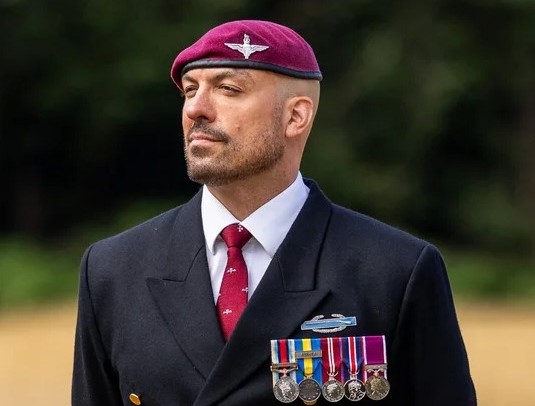
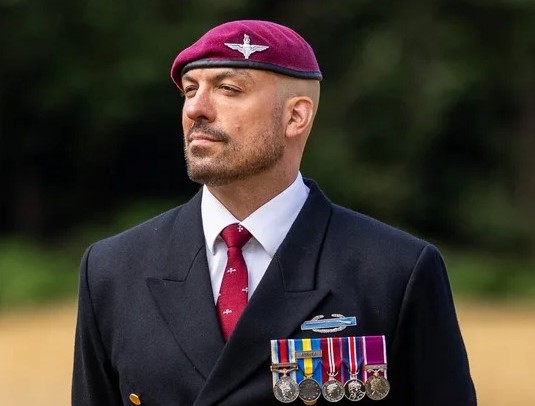 Andrew Fox, an expert in Defense and disinformation
Science-fiction and robotization of warfare
How important are authors and their science-fiction works relative to what warfare will be like in the future? In an exclusive interview, Andrew Fox states that ‘‘Science fiction is valuable at the start of the foresight process, when the aim is to broaden the range of possibilities. It is much weaker as evidence that any particular future will occur.’’
Fox stresses that ‘‘Defence institutions now deliberately use fiction. The US Army's Mad Scientist Initiative has run future-warfare fiction projects since 2016. Britain's Defence Science and Technology Laboratory published Stories from Tomorrow in 2023 and Creative Futures in 2026.’’. He adds that ‘‘The NATO Defence College published NATO 2099 in 2024. The common purpose is hypothesis generation rather than prophecy. Fiction supplies scenarios that should then be tested through technical assessment, intelligence, experimentation and wargaming.’’
In relation to the aspect of science-fiction under analysis, Andrew Fox considers that ‘‘Its limitations are significant. Stories need clarity and drama, while war is shaped by friction, maintenance, power supply, training, procurement, law, organisational inertia and an opponent who adapts.’’
According to Fox, ‘‘Fiction often gives one spectacular technology too much causal weight. Contemporary conflicts show that useful innovations are absorbed into older forms of warfare: trenches, artillery, mines, logistics, deception, coercion and political mobilisation remain alongside autonomous systems and artificial intelligence.’’
This interviewee emphasizes that his work on convergent warfare points more to interaction than to technological determinism. From Andrew Fox's standpoint, ‘‘Decisive effects usually arise from how sensors, communications, electronic warfare, algorithms, information operations, precision fires, industrial regeneration, and human command are integrated.’’ Fox states that ‘‘No single invention creates the future battlefield. Authors are most useful when they help us ask better questions about those relationships and the people living within them.’’ He considers that ‘‘A fictional technology should remain a proposition until evidence shows that it can work at militarily useful range, scale and reliability.’’
Will we be witnessing a growing robotization of warfare on the front line and, as such, a decreased human military presence? The way Andrew Fox sees it, ‘‘The forward edge is already becoming more robotic. Aerial drones conduct reconnaissance, adjust fire, relay communications, resupply isolated positions, and attack. Ground robots move ammunition, evacuate casualties, clear or lay mines, and, in smaller numbers, carry weapons.’’
In Fox's opinion, ‘‘The likely outcome is a thinner human presence across the most exposed strip of ground, rather than a people-free war. Personnel are displaced rearward and dispersed into teams of pilots, intelligence analysts, electronic warfare specialists, maintainers, and software technicians.’’ The interviewee underscores that ‘‘Every apparently unmanned platform still has a human and logistical tail.’’ He adds that ‘‘Batteries, repairs, spectrum access, navigation data, launch sites and replacement airframes become part of the order of battle. Heavy jamming will push more navigation and target-recognition functions onto the machine, while unreliable autonomy in cluttered terrain will continue to demand supervision.’’
Fox stipulates that ‘‘Humans remain necessary where the task involves clearing and holding ground, searching buildings, dealing with civilians, reading ambiguous behaviour, negotiating surrender and accepting responsibility for lethal force.’’ From this expert's angle, ‘‘Robots can reduce exposure and change the distribution of risk. They do not remove the political requirement to control territory and populations.’’
In Andrew Fox's view, ‘‘The future front is therefore likely to consist of mixed human-machine teams and machine-saturated danger zones. It will also look less like a clear line and more like a deep, porous web of sensors, decoys and weapons.’’ He considers that ‘‘Convergent advantage will belong to the force that connects those machines to decision-makers, has the greatest effect, adapts when links fail, and can replace losses. Robotisation changes where people sit in the system; it does not make them disappear.’’
Protection against information and psychological warfare
In order to counteract information and psychological operations carried out by drones, Andrew Fox believes that ‘‘Electronic warfare is essential against the delivery system, although it cannot, by itself, defeat the idea, image or emotion being delivered.’’ He explains that ‘‘Against a conventional radio-controlled drone, electronic support can detect and classify emissions, help locate the aircraft and, at times, its operator. Electronic attack can jam the command or video link and interfere with satellite navigation.’’ This interviewee adds that ‘‘Electromagnetic protection is equally important because friendly communications, navigation and drone links must continue to work while the enemy's are being disrupted.’’
Andrew Fox asserts that ‘‘The distinction between the technical and cognitive layers is important.’’ He mentions that ‘‘A drone operation may involve an airframe, an operator, a navigation link, a sensor, recorded material, an editor, a distribution network, and a target audience. Electronic warfare can affect some links in that chain.’’ However, the interviewee reiterates that, ‘‘If a drone has already recorded a strike and the footage is circulating online, jamming the aircraft cannot recall the narrative. The response then requires rapid verification, the release of credible evidence, attribution, lawful platform action and trusted public communication.’’
Andrew Fox feels that ‘‘Effective defence, therefore, combines radar, electro-optical, thermal, and acoustic detection; electronic warfare; physical interception; camouflage and deception; secure communications; and psychological preparedness.’’ In a nutshell, according to Fox, ‘‘Within convergent warfare, EW protects the electromagnetic layer, while credible information and institutional trust protect the cognitive one.’’
As part of psychological operations / information warfare, can fiber-optic drones comprise advantages for preventing enemy / adversary countermeasures, such as electronic warfare? The interviewee answers by saying ‘‘Yes, within a narrow but important part of the problem.’’. Fox explains that ‘‘A fibre-optic first-person-view drone carries a spool of very thin cable. Command signals and live video travel through that cable rather than via conventional radio-frequency control and video links. Conventional link jamming and spoofing therefore cannot break the connection.’’ He adds that ‘‘Manual video guidance can also make satellite-navigation jamming less relevant.’’
Also regarding fiber-optic drones, Andrew Fox points out that ‘‘The airframe remains visible, audible and physically vulnerable. The spool adds weight and bulk, reducing battery endurance or payload. Cable length creates a hard range; obstacles can snag or break the line; and the discarded fibre may expose routes or launch areas.’’ According to Fox, ‘‘Countermeasures move from the radio spectrum towards detection and physical defeat. NATO's 2025 innovation challenge sought radar, optical, thermal and acoustic sensors linked to interceptors, nets, directed energy and other physical mechanisms. Top cover, camouflage, decoys and route protection also remain useful.’’. This expert does not overlook the fact that ‘‘The familiar cycle continues: one side adapts around EW and the other searches for a new point of vulnerability.’’
Andrew Fox thinks that, ‘‘For information warfare or psyops, fibre could help a camera, loudspeaker or printed-information drone reach a heavily jammed trench, building or small local audience.’’ According to Fox, ‘‘Public evidence for routine fibre-linked psyops remains sparse. Its established importance lies in reliable tactical access and strike control, not in mass influence. Any recording intended for a wide audience must still be recovered or passed into another network.’’ This interviewee concludes that ‘‘Fibre solves a local control-link problem; it does not solve distribution, credibility or audience reception.’’
In relation to the types of information warfare / psychological operations (psyops) conducted by drones, Andrew Fox recognizes that ‘‘A useful distinction is that a drone may have a psychological effect without being part of a psychological operation. Psyops implies a planned attempt to influence the emotions, reasoning or behaviour of a selected audience. Evidence of purpose, message design and coordinated dissemination matters.’’ According to this expert, we need to know that ‘‘A frightening sound, a filmed strike or a persistent overhead presence may have a powerful effect, even when influence was not the mission's primary purpose.’’
With regard to the subject matter previously focused on, Andrew Fox provides the following example: ‘‘Collection and audience intelligence: surveillance, pattern-of-life analysis, battle-damage assessment and observation of reactions. The material becomes an information weapon when it is selected, framed and released to influence an audience.’’ This interviewee adds a few more examples: ‘‘Direct communication: loudspeakers, printed information, notes, QR codes, surrender instructions or guidance towards a safe collection point; propaganda and mobilisation: strike videos can reassure supporters, demoralise opponents, attract recruits, encourage donations and influence international audiences.’’
Fox underscores that ‘‘the drone rarely works alone. Its effects stem from the interplay among collection, physical action, editing, release, platform algorithms, trusted messengers, and follow-on behaviour. A successful operation plans the whole chain and assesses what the audience actually did, rather than counting views.’’
From Andrew Fox's standpoint, it is possible to instruct service(wo)men to withstand information warfare / psyops performed by drones, ‘‘reducing susceptibility and preserving the ability to act’’. Still, according to Fox, this does not mean doing away with fear. He argues that ‘‘Fear of a drone may be rational because the same platform can observe, target and kill. Training has to combine physical survival with cognitive resilience, and it must give people actions they can take rather than simply asking them to be less afraid.’’
The interviewee feels that, ‘‘For service personnel, preparation should include recognising common drone signatures and payloads; warning, dispersion, concealment, shelter and casualty drills; operations under jamming and persistent observation; and exercises that inject false clips, surrender appeals, forged orders and manipulated messages.’’ Andrew Fox adds that ‘‘Units need fast, trusted internal channels and clear procedures for correcting rumours. Operational security matters because an emotional reaction, a photograph or a location shared online may complete the enemy's targeting cycle.’’. He maintains that ‘‘Rotation, sleep, peer support and access to mental-health care also matter, as exhaustion and helplessness increase vulnerability to manipulation.’’
From Andrew Fox's perspective, ‘‘For civilians, authorities should publish clear warning and shelter procedures, identify trusted channels before a crisis, and update them transparently when facts are uncertain.’’ As understood by this expert, ‘‘Practical media literacy teaches people to pause when content elicits an intense emotional response, check the original source and date, compare independent reporting, and avoid circulating graphic or unverified material.’’
The interviewee further develops this subject matter: ‘‘Prebunking can help. A 2022 series of seven preregistered studies, including a large YouTube field experiment, found that short inoculation videos improved recognition of common manipulation techniques and the quality of sharing decisions.’’ Fox goes on to say that ‘‘A later meta-analysis found improved discernment of credibility but no statistically significant overall reduction in the intention to share misinformation. These were general misinformation studies rather than combat-stress trials, so they show useful potential rather than battlefield immunity.’’
The way Andrew Fox sees it, ‘‘Rapid correction works best when it provides an alternative explanation, uses a trusted messenger, and is repeated without unnecessarily amplifying the falsehood. Sweden's psychological defence model emphasises independent media, an informed population, exercises, and social trust. These are strategic assets.’’ This expert underscores that ‘‘Technical counter-drone measures can block the carrier; resilient institutions, credible communication, and rehearsed behaviour reduce the psychological effect.’’
Asymmetric information warfare
The interviewee agrees that, with a few qualifications, it is possible that speak of asymmetric information warfare when the side deemed to be weaker seeks to convey messages to its target audience. Fox states that ‘‘Drones have democratised access to aerial cameras, local surveillance and precision platforms more than they have equalised military power.’’ He explains that ‘‘Commercial components, volunteer engineering, open-source intelligence and social media allow a weaker party to generate credible imagery and place it directly within a stronger opponent's public conversation.’’ Andrew Fox thinks that ‘‘The asymmetric advantage stems from convergence: low-cost hardware combined with intelligence, communications, narrative, distribution and a fast learning system.’’
Specifically, according to Fox, ‘‘At the tactical level, drones can influence a particular unit, facilitate surrender, slow movement, force concealment and create the feeling of continuous observation.’’ This expert adds that ‘‘At the operational level, they can compel dispersal, increase demand for air defence and EW, disrupt logistics, expose rear areas and alter tempo. Cheap decoys may force an opponent to activate radars or spend scarce interceptors.’’ Andrew Fox underlines that ‘‘At the strategic level, a filmed penetration or strike can affect international support, recruitment, fundraising, commercial risk, deterrence and political willingness to continue a campaign.’’
From Andrew Fox's perspective, ‘‘A weaker actor can win attention without winning the war. Footage can reveal methods, expose operators, alienate an audience, or be reinterpreted by opponents. Stronger states retain advantages in industrial capacity, air defence, satellites, intelligence, spectrum control and platform access.’’ He feels that ‘‘The durable edge lies in integration and adaptation: how quickly a force connects a cheap platform to useful intelligence, an appropriate effect and a credible story, and then learns from failure.’’
According to Fox, technically speaking, drones can be used for conducting psychological warfare operations, deep inside enemy/adversary territory, relative to the civilian population. However, he elaborates that ‘‘Physical depth and audience depth are distinct. A long-range drone may fly from outside the country, whereas a short-range system may be smuggled, assembled or launched close to its target.’’
The way Andrew Fox sees it, ‘‘A drone can affect civilians deep in enemy territory by overflying a symbolic location, filming sensitive infrastructure, dropping a local message, relaying communications, or carrying out an attack that demonstrates vulnerability.’’
He acknowledges that ‘‘The aircraft often needs to create only one visually powerful event. Social and broadcast media then carry the image to millions. This is another convergent process: the drone provides access, evidence, or spectacle; the information ecosystem provides scale.’’ This expert feels that ‘‘A successful penetration may force authorities to explain a defence failure and can bring a distant war into everyday political debate.’’
The legal issues of all this also warrant the interviewee's attention. Fox asserts that ‘‘Purpose and law remain central. An accurate warning, surrender appeal, or message about a humanitarian route may be lawful. Civilians may not be attacked, and international humanitarian law prohibits acts or threats of violence whose primary purpose is to spread terror among the civilian population.’’
Andrew Fox underscores that ‘‘Reach also does not guarantee persuasion.’’ He goes on to further develop his answer by explaining that ‘‘Civilian audiences may distrust the source, interpret the same footage differently or rally around their government after an attack. Information effect, therefore, depends on the target audience, context, messenger, timing, and follow-on communication. Deep penetration creates an opportunity; it does not determine the result.’’
As part of information warfare / psyops, how are drones able to precisely convey messages to a very specific more or less numerous target audience, in a certain more or less vast geographical area? Andrew Fox replies that, ‘‘For physical delivery, drones are primarily precise, local tools. Prior intelligence and geolocation can guide them to a specific trench, vehicle, building, ship or assembly point.’’ He adds that ‘‘Its camera can confirm the situation, after which it can drop a note or printed information, display a QR code or hotline number, broadcast a recorded or live message, monitor the response, and guide people towards a collection point.’’ Fox does not overlook the fact that ‘‘Precision comes primarily from the intelligence and target identification behind the mission, not from the airframe alone.’’
This interviewee points out that ‘‘The aircraft can reach a small group that a radio broadcast or broad leaflet campaign might not safely address. A platform configured as a communications relay or imitation cellular base station can also reach selected handsets within a local footprint, although attribution and documented operational details are often contested.’’
According to Andrew Fox, ‘‘The limitations are practical and psychological.’’ He specifies that ‘‘Loudspeakers compete with rotor noise, wind and urban clutter. Printed material drifts. Payload, battery and threat conditions constrain duration and range. Identification errors can target the wrong people. A message delivered to the correct trench can still be rejected, misunderstood or treated as deception. Precision of delivery is not precision of psychological effect.’’
In relation to the aspects previously mentioned, the interviewee outlines the following differences: ‘‘For a mass audience, the model changes. The drone records an overflight, encounter or strike, while broadcasters, platforms, influencers and recommender systems distribute it. One aircraft may speak to one trench; one clip from that aircraft may reach millions. The most effective architecture therefore combines local physical access with digital amplification.’’ He considers that ‘‘It still requires target-audience analysis, an explicit behavioural objective, credible messengers and outcome assessment. View counts are a weak substitute for evidence of changed behaviour.’’
.
Intelligence
Concerning the sphere of intelligence, Fox asserts that ‘‘Drones have democratised tactical reconnaissance. A small unit can obtain live electro-optical or infrared imagery, detect movement, adjust artillery, inspect damage, map trenches, monitor routes, and build a pattern of life without waiting for a crewed aircraft or a national collection asset.’’ He supplements his reasoning by saying that ‘‘Larger platforms can carry radar or signals intelligence payloads and serve as communications relays. The conceptual caution is that a drone collects data. It becomes intelligence only after somebody tasks the sensor, processes and fuses the material, interprets it, and delivers an assessment to a decision-maker.’’
Alternatively, according to Fox, ‘‘Aerial drones can partially replace satellite functions over a local area. They offer close-range resolution, full-motion video, long loiter time over a chosen point, rapid retasking, relatively low entry cost and tailored payloads. They may fly below clouds that block an optical satellite, although the same weather may ground a small aircraft.’’ Nevertheless, this expert knows that ‘‘Drones also face limited range, endurance and field of view; air defence, small arms, cyber compromise and EW; dependence on launch sites and communications; and the legal consequences of entering another state's airspace.’’
Andrew Fox maintains that ‘‘Satellites retain strategic advantages. They can survey vast, remote areas without local basing and support global communications, weather observation, missile warning and navigation. Orbital overflight also has an established legal practice that does not apply to an aircraft entering sovereign airspace.’’ According to Fox, ‘‘Constellations and synthetic-aperture radar provide scale and persistence that a tactical drone fleet cannot match.’’ He thinks that, ‘‘For an actor without sovereign satellites, the sensible architecture combines commercial satellite imagery for wide-area orientation and change detection, drones for immediate local surveillance, and ground sensors and open-source material for corroboration.’’
The interviewee stresses that ‘‘For espionage outside open warfare, small drones offer inexpensive close reconnaissance but carry liabilities: noise, visibility, short endurance, forensic traces, detectable links, and an obvious violation of controlled airspace. Human access, cyber collection, commercial imagery, or fixed sensors may be more discreet.’’ In Andrew Fox's view, ‘‘High-altitude pseudo-satellites could eventually fill part of the gap between aircraft and orbit, especially for persistent regional coverage and communications relay. They are an emerging complementary layer, not a routine wartime substitute for satellites.’’
Conclusion
To a certain extent, science-fiction influences the future of warfare, opening up some possibilities that reality will determine, at a given moment in time, whether or not this could be brought about usefully and reliably. Scientific discoveries and technological innovations tend to interact with what already exists in the sphere of warfare.
These days, while there is an increased robotization of the forward edge, at least for now this does not mean a complete absence of human beings. In the future, we will likely have a mix of human-machine teams and danger zones saturated with machinery. This robotization will enable the side applying it to achieve fewer troops wounded and killed in action.
Drones emerge and evolve within a context of technological progress. In reality, these weapons can currently be regarded as relevant instruments of cognitive, information and psychological warfare, with these three aspects being interconnected. Generally speaking, the goal is to influence perceptions, behaviors and decision-making by certain target audiences.
A part of protection against information and psychological operations conducted by drones goes by way of EW, even though this, in principle, does not apply to fiber-optic drones. On top of this technological factor, protecting service(wo)men can include training to boost cognitive resilience, internal communication channels that disseminate credible messages as well as monitoring of mental health. To protect civilians, authorities need to indicate credible communication channels prior to a crisis and, in times of uncertainty, provide timely information to the audiences. Moreover, in this regard, it should be added that media literacy is also important.
As part of armed conflict, especially in its aspect pertaining to visual warfare, drones serve to both, for example, capture images and somehow contribute toward the process of creating and disseminating various types of contents, including narratives. All this can entail a coordinated dissemination at local, national and international levels, to more or less numerous receivers, through media, social media and drones themselves. The latter two can precisely convey messages to certain target audiences. In this regard, drones act in multiple ways on the front line of a conflict.
Drones manage to come closer to targets, with fewer economic costs and with no risk of loss of life, compared to aircraft and their pilots. This way, the battlefield is more transparent. Currently, drones are highly important within a domain that is vital for all military operations: ISR. It is sensible to have in-depth coordination between intelligence and information operations.
Drones are greatly linked to asymmetric warfare, enabling small and medium-sized powers to face the conventional superiority of armed forces from countries regarded as powerful. Asymmetry is chiefly shown in the economic and financial sphere. It becomes necessary to compare what each side spends as well as the damage it can cause and withstand. As part of this, we need to underscore cost asymmetry: in principle, currently, those who attack using drones spend less than those wanting to defend themselves. A relatively inexpensive weapon, such as a drone, can destroy enemy targets with a directly or indirectly high economic and financial value.
There is also asymmetry in certain specific domains. Cognitive warfare is relatively cheaper for those starting it than for those wanting to counteract it. In the context of asymmetric information warfare, social media and AI are essential. Currently, when a side considered to be weaker wants to create and send its messages to the target audience, it has various means at its disposal, at relatively lower prices, such as, drones equipped with video cameras. However, in and of itself, gaining the attention of more or less vast audiences does not ensure victory in warfare.
Drones can convey information / psychological warfare to targets found deep in enemy territory. The legal aspects of all this should be taken into account when the targets are civilians.
With regard to messages, for physical delivery drones are essentially precise local instruments. This precision is linked to intelligence and to identifying targets. Through the contribution from drones, what starts out as being disseminated through social media can subsequently move to the mainstream media and reach vast audiences in several countries. On top of conveying messages to targets, it is vital to examine the effects they have caused on their audiences. Thus, it will be possible to determine the efficacy of cognitive, information and psychological operations.
Within the sphere of ISR, drones democratize tactical reconnaissance, which even benefits small military units. Drones collect data which should later become intelligence, thereby becoming useful for decision-makers. Even with a few limitations, drones can locally replace satellites. A drone's entry into the airspace of another country entails legal implications which, in principle, are not raised with satellites. These comprise strategic advantages.
Drones impact tactical, operational and strategic levels, even though there are those who relativize their importance in the latter two levels; even so, it can be acknowledged that these weapons have greatly changed the way warfare unfolds. We should point out the dynamics of armed conflicts and the need to have an overview of all of them.
If you want peace, study warfare.
References
Alfaqih, F. (2025). Emerging Threats and Resilience in Social Media-Based Asymmetric Warfare: Ukraine- Russia Conflict Case Study. Retrieved 9.9.2026 from https://jilc.e-science.space/wp-content/uploads/2025/10/JILC_3_2025-114-121.pdf
Allen, K. (June 3, 2025). Drones: A Propaganda Tool for Africa’s Armed Groups? Retrieved 28.7.2026 from https://issafrica.org/iss-today/drones-a-propaganda-tool-for-africa-s-armed-groups
Andrew Fox. Retrieved 25.9.2026 from https://www.linkedin.com/in/mrandrewfox/
Atherton, K. (March 26, 2022). How Drones in Ukraine Help Fuel Propaganda and Shape Perception. Retrieved 27.7.2026 from https://publicintegrity.org/national-security/ukraine-in-crisis/how-drones-in-ukraine-help-fuel-propaganda-and-shape-perception/
Balkan, S. (2017). Daesh’s Drone Strategy: Technology and the Rise of Innovative Terrorism. Retrieved 25.8.2026 from https://media.setav.org/en/file/2017/08/daeshs-drone-strategy-technology-and-the-rise-of-innovative-terrorism.pdf
Bazalgette,D. Janin, P. (November 5, 2025). Cognitive Warfare: What Seven Years of Military-Civilian Research Reveals. Retrieved 14.9.2026 from https://www.polytechnique-insights.com/en/columns/society/cognitive-warfare-what-seven-years-of-military-civilian-research-reveals/
Black, J. (March 4, 2025). David vs. Goliath: Cost Asymmetry in Warfare. Retrieved 6.9.2026 from https://nationalinterest.org/feature/david-vs-goliath-cost-asymmetry-in-warfare
Bondar, K. (March 6,2025). Ukraine’s Future Vision and Current Capabilities for Waging AI-Enabled Autonomous Warfare. Retrieved 26.8.2026 from https://www.csis.org/analysis/ukraines-future-vision-and-current-capabilities-waging-ai-enabled-autonomous-warfare
Bonvie, L., et alii (November 6, 2025). Psichological Sequelae of Drone Attacks. Retrieved 10.7.2026 from https://www.psychiatrist.com/pcc/psychological-sequelae-drone-attacks/
Castañeda, B. (July 3, 2026). What Is Asymmetric Warfare? A Quick Guide. Retrieved 8.9.2026 from https://thedefensepost.com/2026/07/03/asymmetric-warfare-guide/
de Wijk, R. (May 11, 2026). Drones Transform Warfare But Not Strategic Outcomes. Retrieved 9.9.2026 from https://www.gisreportsonline.com/r/drones-warfare-strategic-outcomes/
Dick, E. (December 4, 2025). Defining Cognitive Warfare: Maximalist versus Minimalist Approaches. Retrieved 8.9.2026 from https://tdhj.org/blog/post/defining-cognitive-warfare/
Drone Industry Glossary of Terms. Retrieved 25.9.2026 from https://www.dronetechaerospace.co.uk/drone-industry-glossary-of-terms
Drones Play Key Role in Terrorist Propaganda, On / Off Battlefield (June 24, 2025). Retrieved 6.8.2026 from https://adf-magazine.com/2025/06/drones-play-key-role-in-terrorist-propaganda-on-off-battlefield/
Ekka, S. (August 18, 2026). What Is Cognitive Warfare? Retrieved 12.9.2026 from https://cnaws.in/explainers/what-is-cognitive-warfare
Electronic Warfare by Drone and SMS (May 18, 2017). Retrieved 26.8.2025 from https://dfrlab.org/2017/05/18/electronic-warfare-by-drone-and-sms/
Fabian, S. (July 7, 2026). The Drone Revolution That Isn’t. Retrieved 2.9.2026 from https://mwi.westpoint.edu/the-drone-revolution-that-isnt/
Frequently Asked Questions: International Humanitarian Law and the Use of Drones in Armed Conflicts (December 10, 2025). Retrieved 17.7.2026 from https://www.icrc.org/en/article/faq-international-humanitarian-law-drones-armed-conflict
Ibrahim, F., et alii (December 1, 2023). A Systematic Review of Cognitive and Psychological Warfare. Rerieved 7.9.2026 from https://tdhj.org/blog/post/cognitive-psychological-warfare/
Jensen, B. (September 16, 2025). Operational Art in the Age of Battle Networks. Retrieved 27.8.2026 from https://www.csis.org/analysis/chapter-4-operational-art-age-battle-networks
Joint Intelligence, Surveillance and Reconnaissance (July 8, 2026). Retrieved 27.8.2026 from https://www.nato.int/en/what-we-do/deterrence-and-defence/joint-intelligence-surveillance-and-reconnaissance
Khomenko, V. (October 20, 2025). Shaed with Propaganda: Russians Modify Kamikaze Drone to Drope Leaflets. Retrieved 25.8.2026 from https://militarnyi.com/en/news/shahed-with-propaganda-russians-modify-kamikaze-drone-to-drop-leaflets/
Krewson, T., Clarke, P. (July 9. 2026). Sovereign Shield, Alliance Sword: Evolving NATO’s Strategic Communications Doctrine for Cognitive Warfare. Retrieved 8.9.2026 from https://smallwarsjournal.com/2026/09/07/sovereign-shield-alliance-sword-evolving-natos-strategic-communications-doctrine-for-cognitive-warfare/
Kumar, R. (January 27, 2026). How the Sound of Drones Inflicts Psychological Trauma in Ukraine. Retrieved 24.7.2016 from https://newlinesmag.com/spotlight/how-the-sound-of-drones-inflicts-psychological-trauma-in-ukraine/
Lavaud, S. (March 17, 2026). Drone Warfare May Raise New Mental Health Concerns. Retrieved 27.7.2026 from https://www.mdedge.com/fedprac/article/273288/mental-health/drone-warfare-may-raise-new-mental-health-concerns
López-Cantos, F. (November 15, 2024). The Drone Warfare. Fact-checking, Fake-pictures and Necropolitics. Retrieved 29.1.2026 from https://www.tandfonline.com/doi/full/10.1080/23311886.2024.2426706
Lopez, J. (December 23, 2025). Operationalizing Intelligence Through Small Unmanned Aircraft Units. Retrieved 10.9.2026 from https://mipb.ikn.army.mil/issues/jul-dec-2025/operationalizing-intelligence-through-small-unmanned-aircraft-systems/
Maddox, J. (July 24, 2025). It’s Time to Tkink About (and Fear) Drones and Psychological Operations. Retrieved 8.7. 2026 from https://warontherocks.com/its-time-to-think-about-and-fear-drones-and-psychological-operations/
McMillan, C. (August 26, 2026). Drone Warfare. Retrieved 9.9.2026 from https://www.fdd.org/analysis/2026/08/26/drone-warfare/
Mai, C. (April 2021). The Impact of Drone Technology on Intelligence Practices: Revolutionary or Evolutionary? In Technology. Rethinking Security, IR Theory, Philosophy, and History. Retrieved 26.8.2026 from https://3sjournal.com/wp-content/uploads/2021/08/3rd-Edition-final-draft.pdf
Molloy, O. (August 3, 2026). Drones in Modern Warfare (2024-2026). Lessons Learnt from the War in Ukraine. Retrieved 9.9.2026 from https://researchcentre.army.gov.au/library/occasional-papers/drones-modern-warfare-2024-2026
Monnappa, K. (September 30, 2025). The Arachnid’s Gambit: Hyper-Asymmetric Interdiction in the Drone Age and Its Strategic Implications for India. Retrieved 7.9.2026 from https://www.ejsss.net.in/article_html.php?did=15966&issueno=0
Panda, J. (July-September 2025). Visual Warfare and Strategic Communication: Case Studies from Ukraine, Israel, and India. Retrieved 9.9.2026 from https://academicjournals.org/journal/JMCS/article-full-text-pdf/D1F214573543
Pino, A., Pettigrew, S. (September 12, 2024). Drones Having Psychological Impact on Soldiers. Retrieved 11.7.2026 from https://oe.t2com.army.mil/product/drones-having-psychological-impact-on-soldiers/
Rushing, B., et alii (March 5, 2026). Cognitive Warfare: Definition, Framework, and Case-Study. Retrieved 8.9.2026 from https://arxiv.org/html/2603.05222v1
Russo, S. (March 1, 2026). Cognitive Warfare Is Cheap – and That’s the Problem. Retrieved 8.9.2026 from https://smallwarsjournal.com/2026/01/30/cognitive-warfare-is-cheap/
Saini R., et alii (October 2021). Cry in the Sky. Psychological Impact on Drone Operators. Retrieved 17.7.2026 from https://journals.lww.com/inpj/fulltext/2021/30001/cry_in_the_sky__psychological_impact_on_drone.5.aspx
Schwille, M., et alli (December 9, 2020). Intelligence Support for Operations in the Information Environment. Dividing Roles and Responsibilities Between Intelligence and Information Professionals. Retrieved 24.9.2026 from https://www.rand.org/pubs/research_reports/RR3161.html
Singh, J. (January-June 2025). The Emerging Role of Drones in Shaping Present and Future Conflicts. Retrieved 14.7.2025 from https://capssindia.org/wp-content/uploads/2025/09/Jashandeep-Singh.pdf
Valantin,J.-M., Lollia, F. (April 6, 2026). Cognitive Warfare: A New Strategic Frontier? Retrieved 8.9.2026 from https://smallwarsjournal.com/2026/06/04/cognitive-warfare-a-strategic-frontier/
Wallace, M. (July 29, 2026). Asymmetric Warfare in the Drone Wage: Lessons from Ukraine and an Urgent Warning for U.S. Critical Infrastructure. Retrieved 5.9.2026 from https://www.hstoday.us/subject-matter-areas/critical-infrastructure/asymmetric-warfare-in-the-drone-age-lessons-from-ukraine-and-an-urgent-warning-for-u-s-critical-infrastructure/
Wood, G. (May 15, 2026). Cognitive Warfare Through the Lens of Critical Neuroscience: Data, Theory, and Values, Retrieved 7.9.2026 from https://link.springer.com/article/10.1007/s12152-026-09647-3
Yousef, H. (September 4, 2026). The New Economics of Warfare: David vs Goliath. Retrieved 9.8.2026 from https://www.thecipherbrief.com/the-new-economics-of-warfare-david-vs-goliath
Interview
*This interview was conducted, via email, on August 25, 2026
Photo: Retrieved 25.9.2026 from https://www.andrewfox.online/about
Published by Marinho Media Analysis / October 07, 2026